"Block Blast calculator" usually means one of two different things depending on why you're searching for it: either a tool that tells you where to place your current three pieces, or an explanation of how the game's scoring actually works so you can plan around it. This page covers both, since they're closely related understanding the scoring logic is what makes a placement recommendation make sense instead of feeling like a black box.
If you want the placement tool itself rather than the explanation, the Block Blast Solver does exactly that upload a screenshot or enter your board manually and it evaluates the board for you.
What Is a Block Blast Calculator?
A Block Blast calculator (sometimes called a solver) is a tool that looks at your current board and the three pieces available and works out which placement leaves you in the strongest position, rather than just which placement is legal. The distinction matters: several placements might technically fit a piece somewhere, but only one or two of them keep the board flexible enough to accept whatever comes next.
It does this by evaluating a few things at once for each possible placement: how much open space remains afterward, whether it triggers a line clear, and whether it leaves large enough gaps for pieces you haven't seen yet. That's a lot to track by eye on a crowded board, which is where a calculator earns its place over just guessing.
How Block Blast Scoring Actually Works
Clearing a full row or column is the core way you earn points, and clearing more than one line in a single placement earns noticeably more than clearing them one at a time the game rewards a multi-line clear with a bonus on top of the base points rather than just adding them up separately.
The second scoring layer is the combo system: clearing lines on consecutive placements builds a streak, and each additional clear in that streak is worth more than the last. The exact grace window before a streak resets differs by platform Android generally expects a clear within every 3 block placements, while iOS allows roughly one clear per 3 full moves but on either platform, going too long without a clear breaks the streak back to zero. That's why advanced players will sometimes take a small, unglamorous clear just to keep the streak alive rather than holding out for a bigger setup that risks breaking it.
For a full breakdown of chaining clears together, see our dedicated Block Blast combos guide, and for score benchmarks by skill level, see the Block Blast High Score guide.
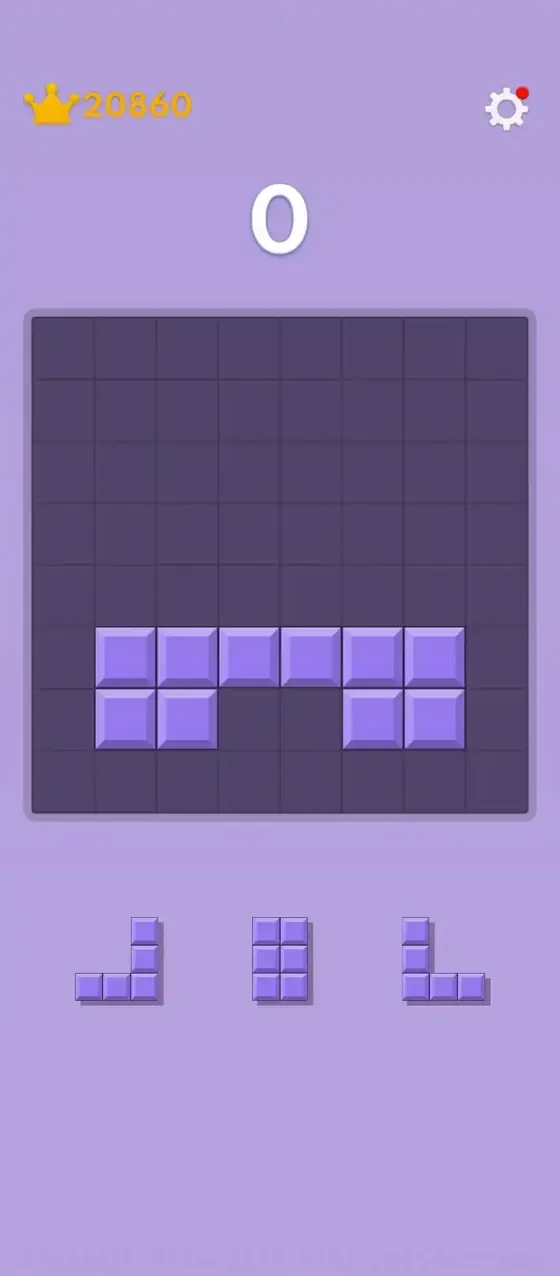
How a Calculator Evaluates Board Space
Beyond the immediate score from a placement, a calculator has to weigh what the board looks like right after that placement is made. It checks for a few specific things: whether the move opens a large connected area or splits the remaining space into small disconnected pockets, whether it leaves room for a large piece like a 3x3 square, and whether it's setting up an easy clear on the very next turn or making one harder to reach.
This is the part guessing tends to miss. A placement that clears a line right now can still be the wrong move if it leaves the rest of the board fragmented into gaps nothing else will fit into the calculator catches that trade-off because it's evaluating the resulting board state, not just the immediate clear.
Calculator vs. Guessing
Guessing works fine on an open early-game board where almost anything fits. It starts costing you once the board gets tighter, because a placement that looks fine at a glance can quietly remove the only spot a later piece needed. Using a calculator or solver instead doesn't replace your own judgment it's closer to double-checking a placement before you commit to it, the same way you'd recheck a calculation you weren't fully sure of. Over a full session, that difference tends to show up as fewer accidental dead boards rather than any single dramatic save.
Is a Block Blast Calculator Accurate?
It's only as accurate as the board information it's given. If you're using screenshot analysis, a clear, uncropped image of the full board and piece tray matters a partially hidden board or oddly cropped screenshot can lead to a wrong read. If you're entering the board manually, double-checking that you've placed the pieces correctly before asking for a recommendation matters just as much. Given accurate input, the evaluation itself follows straightforward rules about space and line clears, not guesswork.
For the actual tool, use the Block Blast Solver it combines both input methods and applies this same evaluation logic to your board.
Frequently Asked Questions
Does clearing multiple lines at once score more than clearing them separately?
Yes. A placement that clears two or more lines at once earns a bonus on top of the base points, rather than simply adding up what each line would be worth on its own.
What breaks a combo streak?
Going too long without clearing a line breaks your combo streak back to zero though the exact grace window differs slightly by platform (roughly every 3 block placements on Android vs. every 3 full moves on iOS). Either way, it's why players will sometimes take a small clear just to keep the streak alive rather than holding out for a bigger setup that risks breaking it.
Do I need the solver every turn, or just when I'm stuck?
It's most useful once a board starts looking tight or you're weighing two placements that both look reasonable that's when the difference between a good move and a move that quietly fragments your board is hardest to see by eye.
Is Block Blast scoring the same on Android and iOS?
Mostly, but the combo grace window differs slightly between platforms Android generally expects a clear roughly every 3 block placements, iOS roughly every 3 full moves. If your streak keeps breaking sooner than you expect, checking which platform you're on is worth doing before assuming you misjudged a placement.