No - there is not always a solution in Block Blast. The game ends specifically when none of your three current shapes can be placed anywhere on the 8×8 board. This is an intended part of the design, not a bug, and it can happen even when the board still has open cells.
This is one of the most commonly asked questions about the game, and the short answer above is the accurate one. But the more useful question is why it happens and whether there's anything you can do about it - that's what the rest of this covers.
Why Block Blast Doesn't Guarantee a Solution
Block Blast deals you three shapes at a time, randomly selected from its shape library, and the game continues only as long as at least one of those three fits somewhere on your current board. There's no built-in guarantee that a solvable combination of shapes will always be generated for the board state you happen to be in.
That's a deliberate design choice shared by this entire genre of block-placement puzzle games: the tension of possibly running out of moves is part of what makes the scoring meaningful. If a solution were always guaranteed no matter how you played, skillful board management wouldn't matter - you could never lose, which would remove the challenge entirely.
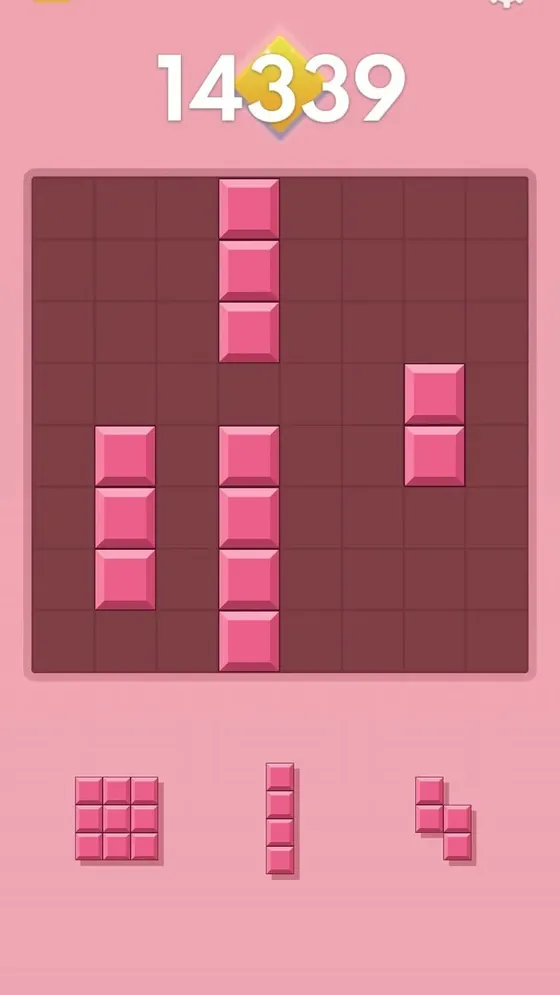
Open Cells Don't Mean an Open Move
This is the part that trips most players up: a board can have plenty of empty cells and still have zero valid moves. What matters isn't how much space is left, it's the shape of that space compared to the shape of your three pieces.
For example, if your remaining space is a scattering of single disconnected cells, but all three of your pieces are 3-in-a-row or larger shapes, none of them fit - even though the board isn't full. This is why "the board looked fine and then suddenly I lost" is such a common experience.
Does It Get Harder the Longer You Play?
The rules and shape odds don't change as your session goes on - every turn draws from the same shape library regardless of your current score. What actually changes is your board state: the longer a game runs, the more fragmented and constrained your open space tends to become if it isn't actively managed, which is why runs more often end later in a session rather than at the very start. It's a consequence of accumulated board state, not the game secretly raising its difficulty.
How to Reduce How Often You Run Out of Moves
- Plan all three shapes together, not one at a time. Placing the first shape without considering where the other two will go is the most common way boards become unsolvable.
- Avoid creating isolated single-cell gaps. Technically "open" space that's too small or oddly shaped for most pieces is close to wasted space.
- Clear lines proactively, not just when convenient. Keeping rows and columns closer to completion preserves more usable shapes' worth of room.
- Check before you commit on a tight board. Once a board starts looking fragile, the Block Blast Solver evaluates the entire board state and finds valid placements a manual scan can miss - including ones that clear multiple lines and free up space you didn't realize was there.
For a full breakdown of what to do once you actually hit a dead board, see what to do when no moves are left in Block Blast. For general board-control fundamentals, see Block Blast strategy and board control techniques.
Frequently Asked Questions
Is there always a way to win in Block Blast?
No. Block Blast has no traditional "win" state to begin with - it's an endless scoring game, and it ends whenever your current three shapes can't be placed anywhere on the board. This can happen regardless of how well you've played.
Is it possible to always avoid running out of moves?
Not with certainty, since the shapes you're dealt are random. But keeping your board's open space well-connected rather than fragmented significantly reduces how often you get boxed in, and checking a tight board with a solver before committing to a placement catches moves a manual scan would miss.
Does Block Blast get harder the more you play?
The underlying rules and shape odds stay the same throughout. What increases is how constrained your board tends to become the longer a session runs if space isn't actively managed - that's a result of accumulated board state, not a hidden difficulty increase.
If the board looks empty, can it still be unsolvable?
Yes. What determines whether a shape fits is the exact shape of your open space, not how much of it there is. A board with many open cells can still have zero valid moves if none of your three current pieces match the shape of that space.